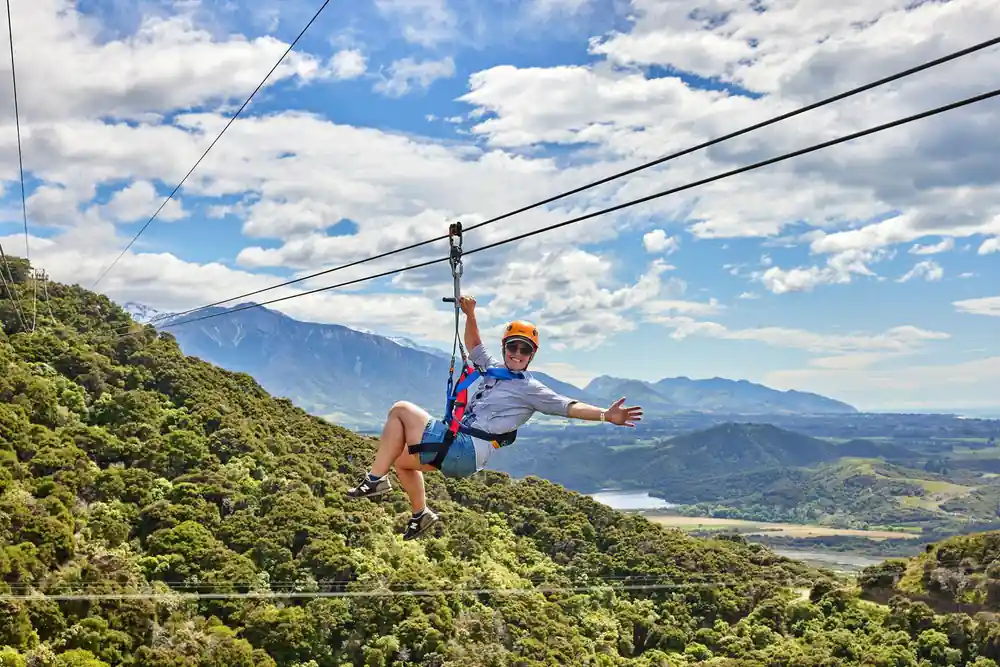
In a nutshell
- The course is not suitable for anyone under 30 kg or over 125 kg, and both figures are checked, not just the upper one.
- The lightest riders don't carry enough momentum to complete the longest line, which runs to 620 metres, so a minimum protects the ride itself.
- Closed-toe shoes are required. Sandals, flip flops, high heels, other open-toed shoes and bare feet are all not allowed.
- There's no published minimum age. The rule is weight, so confirm with the operator when booking if you are unsure a child qualifies.
The weight range, and why it has two ends
EcoZip's Kaikōura zipline course is not suitable for anyone under 30 kg or over 125 kg. Both numbers are real operating limits rather than a rough guideline, and they are applied to every rider before a harness goes on, not left to a sign at the gate that nobody actually checks.
Most zipline courses only publish a ceiling, because a heavier rider puts more force through the cable, the pulley and the brake than the equipment is built for. A floor as well is unusual, and it exists for a different reason entirely: what happens at the far end of the line, not what happens to the gear along the way.
Neither figure is a suggestion aimed at comfort. A rider over 125 kg is a load question for the equipment; a rider under 30 kg is a physics question for the ride itself, and the two limits sit on the page together only because they happen to bracket the same number line.
Why the lighter limit is the one that matters here
A zipline works on momentum. Gravity and the run of the cable carry a rider from the platform at one end to the platform at the other, and a heavier rider carries more of both along the way. Someone close to the 30 kg floor arrives with far less speed than someone twice their weight, on exactly the same line, in exactly the same conditions.
That gap widens as the line gets longer, and this course has five, running from 250 metres up to 620 metres. On the shorter runs a light rider still reaches the end, just more gently. On the longest one, there is far less room for that gentleness to still get someone all the way to the platform, which is the reason the operator sets a minimum at all rather than only a maximum.
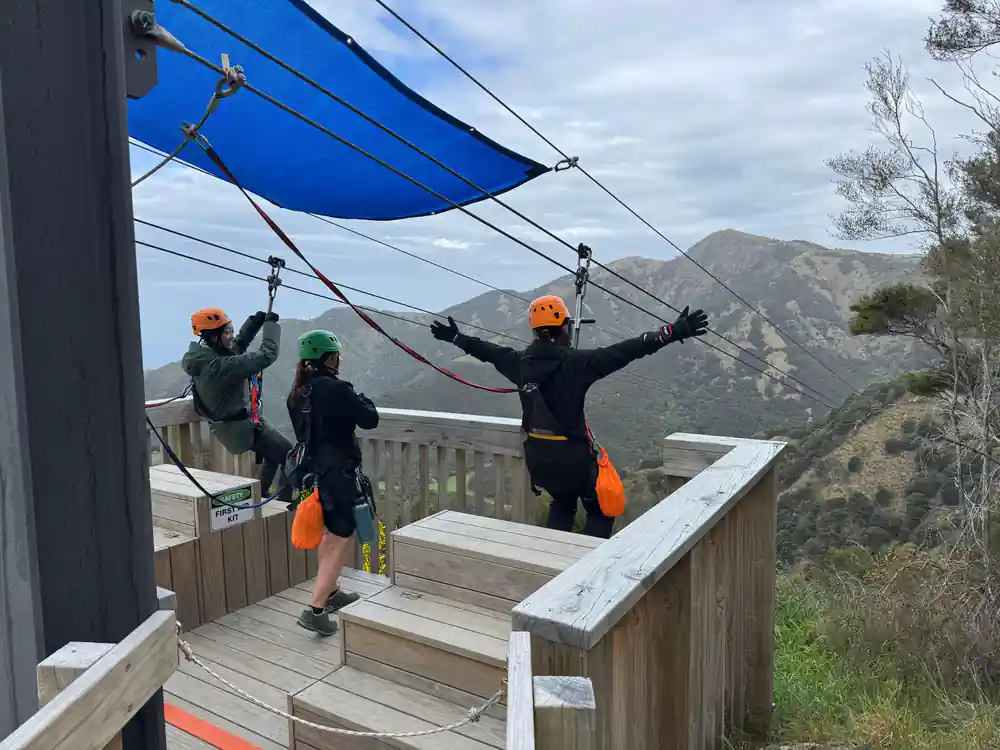
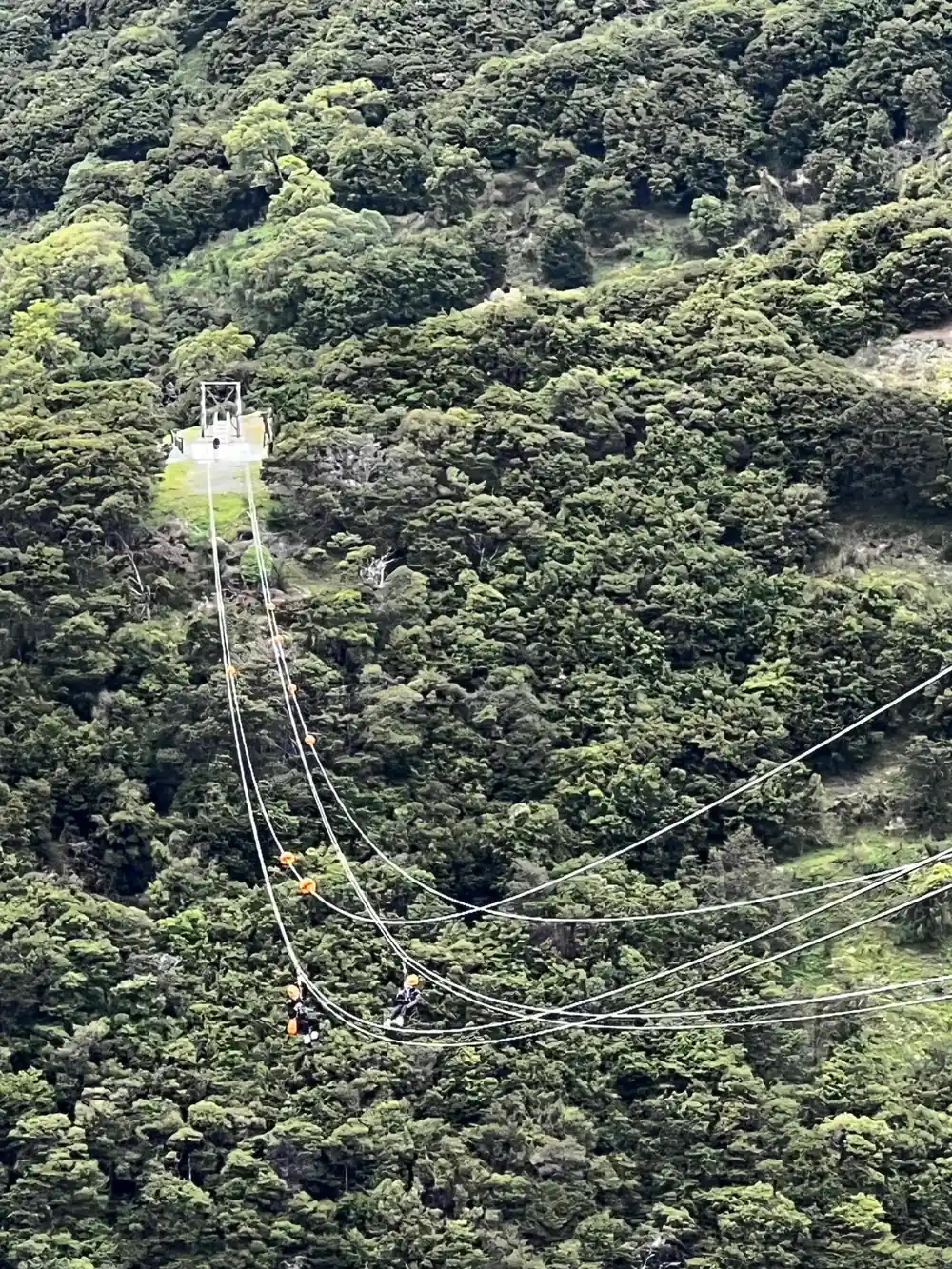
One of the five dual lines through Kaikōura's native forest, built for two riders side by side
Children, and why the limit is weight rather than age
The operator publishes a weight range, not an age. There is no separate child minimum stated anywhere, so a child who weighs 30 kg or more meets the same requirement as an adult, and one who does not, does not, whatever their age happens to be.
Because the cut-off is a scale reading rather than a birthday, the practical step for a family is to weigh a child before booking rather than guess, and to check directly with the operator if the number sits close to the line in either direction. A child who is tall for their age can still be under 30 kg, and a smaller adult can be closer to it than they expect.
The lines are dual, which changes who can ride together
All five ziplines here are dual lines, meaning two cables run side by side and two riders go at once rather than one behind the other. That does not mean the two riders have to match in weight, only that each of them individually sits inside the same 30 to 125 kg range on their own line.
It does mean a parent and a lighter child can go down side by side rather than one of them waiting alone at the platform, which is worth knowing if part of the appeal of the day is doing it together rather than in separate turns further apart.
620 m
The longest of the five lines runs to 620 metres, and it is this one that sets the 30 kg minimum for every rider on the course.
The footwear rules, stricter than most zipline parks
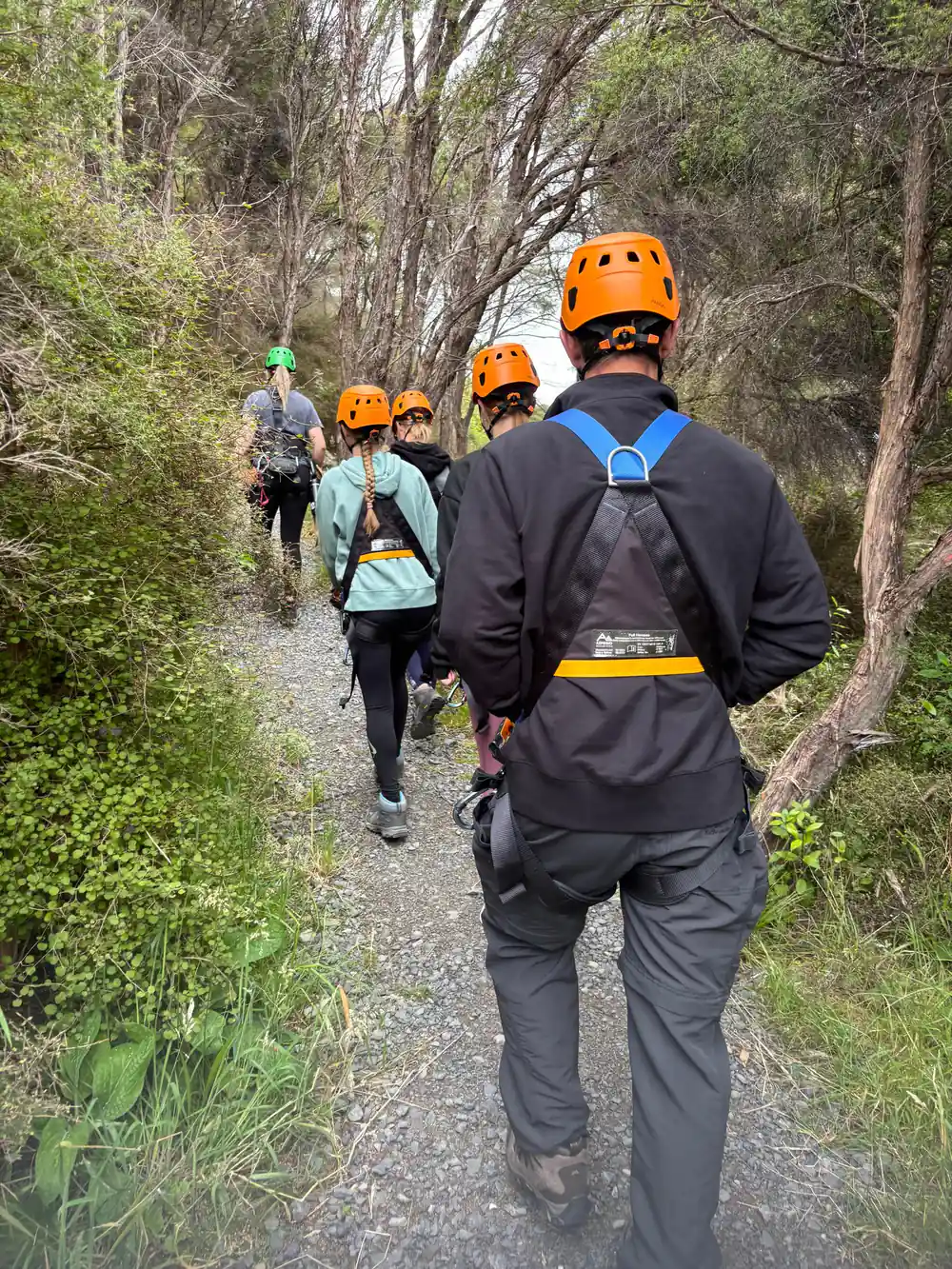
Closed-toe shoes are required for every rider on this course. High-heeled shoes, sandals, flip flops, other open-toed shoes and bare feet are all not allowed, and that list is stricter than the footwear rule at most zipline parks, which often just ask for something that stays on your foot rather than ruling out entire categories of shoe.
Trainers, hiking boots or anything closed and flat that you already own will do the job. There is no need to buy anything new for this, and turning up in the wrong shoes is one of the few things on this tour that is entirely avoidable with a moment's thought the night before.
The rule applies from the moment you arrive, not just on the platform, since the day also includes a guided drive across a working farm before any line is reached. Pack the shoes you plan to wear, rather than the ones you plan to change into.
What else is not allowed
Smoking and intoxication are not permitted anywhere on the tour. Both sit alongside the weight range and the footwear rule as fixed conditions of taking part, rather than points of etiquette that flex depending on the group.
None of the three rules, weight, footwear or intoxication, are stated as preferences. They read as conditions of being allowed on the course at all, which is the honest way to describe them rather than softening any one of the three.
What to bring, and what to do if you're close to a limit
Beyond the shoes on your feet, the list is short: water, comfortable clothes and any personal medication you need for the day. None of it is unusual for a half-day outdoors, and none of it substitutes for meeting the weight range or the footwear rule.
If your own weight, or a child's, sits close to either 30 kg or 125 kg, weigh yourself or them in the days before you travel rather than guessing on the morning. A number that is close but genuinely unclear is worth raising when you book.
That is also the right moment to raise a health condition or any other concern the two published limits do not cover. The honest answer to a question this page cannot settle is to ask the operator directly, rather than travel to Kaikōura and find out at the counter.
Inside the range and ready for five ziplines?
from US$117Reserve now & pay later