In a nutshell
- Flying fox is New Zealand's own term for a zipline, a cable ride powered by the drop in height between two points.
- Dual means two parallel cables, so two people ride the same line side by side instead of one after the other.
- The course runs from a 250 metre first line to a 620 metre last one, stepping up in length five times.
- All five lines run through native forest, New Zealand's own indigenous bush, rather than over cleared land.
What a flying fox actually is
Flying fox is the word used across New Zealand for what most other countries call a zipline: a rider clipped to a pulley that runs down a fixed cable from a high point to a lower one, moved by nothing but the drop in height between the two ends. If the term is new to you, that is the whole explanation. It is a New Zealand name for a familiar idea, not a different piece of equipment.
The name turns up on signposts and in safety briefings across the country, so it is worth knowing before the day rather than working it out from context once you are standing at the first platform. On this course it is used the way local operators use it everywhere: as the plain word for the ride, not as a marketing flourish.
What dual changes about the ride
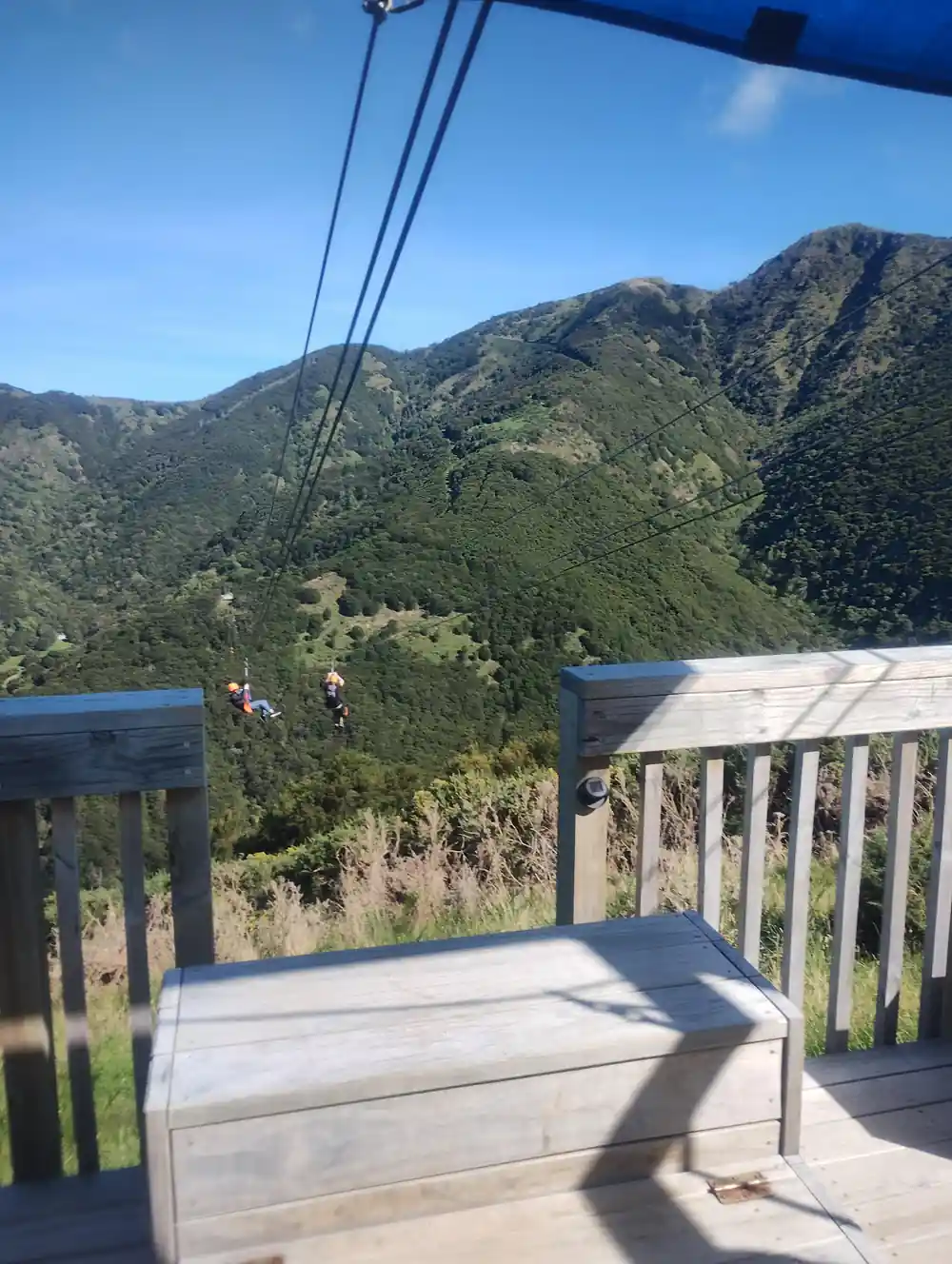
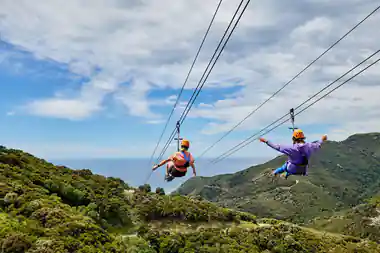
Each of the five lines here is a dual line, which means two cables run side by side rather than a single cable carrying riders one after another. Two people clip in together and travel the same line at the same time, landing on the far platform within moments of each other rather than in sequence.
That is a mechanical detail with a real effect on the day. A couple can go down together and watch each other do it rather than one waiting at the bottom for the other to land, and the same is true for a parent riding alongside a child. Nobody on this course has to ride it alone unless they choose to.
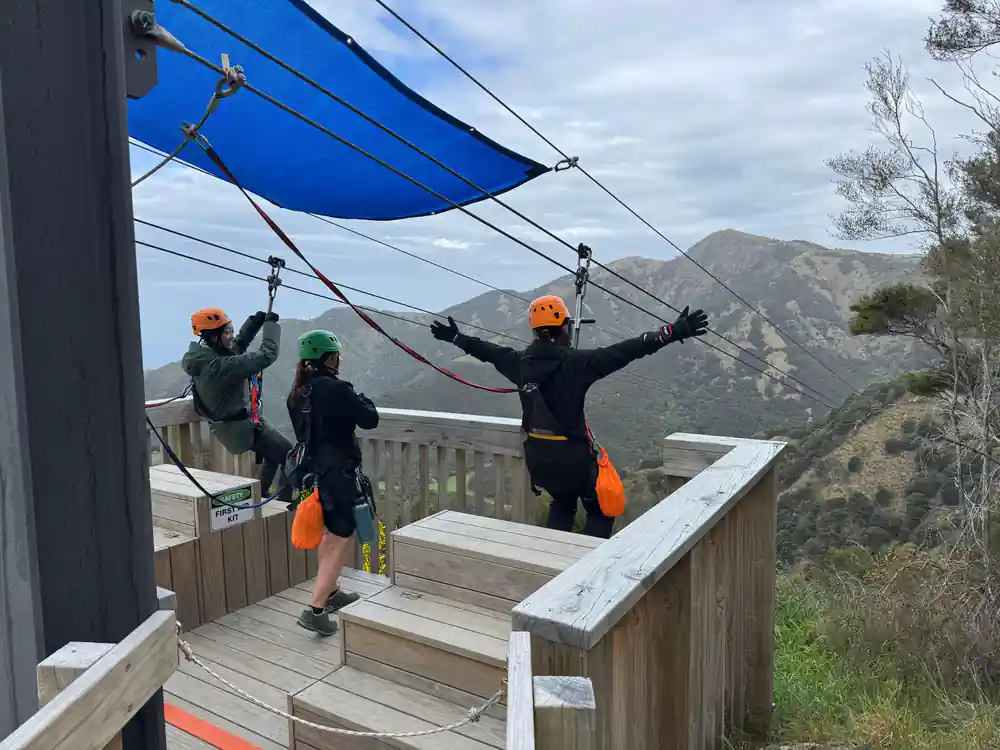
Two riders on one of the five lines, native forest either side.
Five lines, each longer than the last
The course is built from five lines in ascending order. The first runs 250 metres, the last runs 620 metres, and the three in between step the distance up from one line to the next. You start on the shortest and finish on the longest, rather than opening with the biggest number and coasting after it.
That progression is the shape of the whole activity, not a detail about any single line. Instead of five versions of the same crossing, the course is arranged so each one asks a little more than the one before it, building towards the 620 metre run rather than starting there.
Riding through native forest
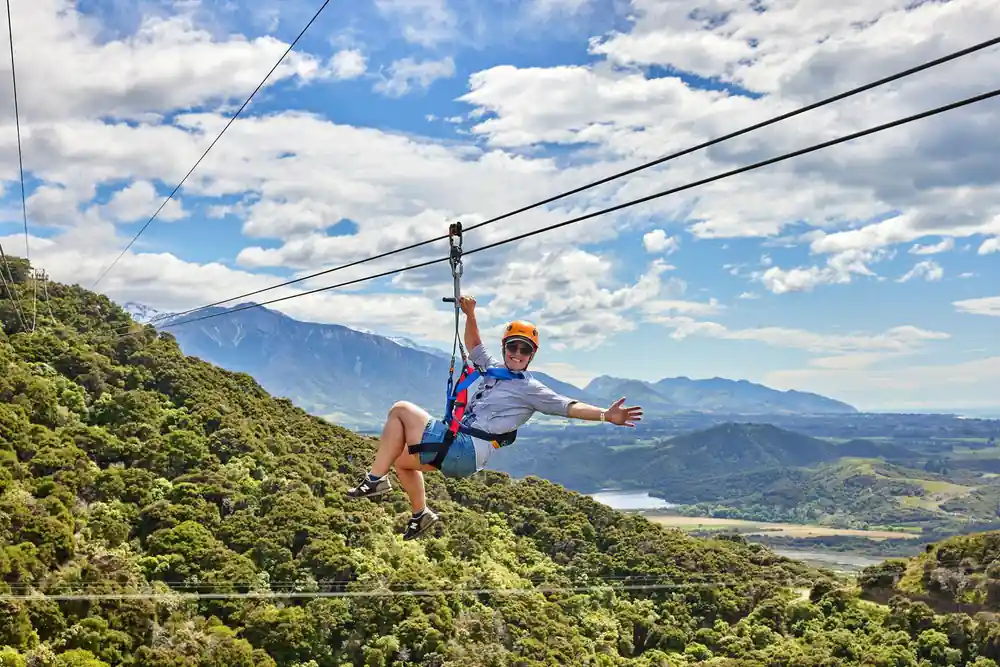
All five lines run through native forest, which in New Zealand means the country's own indigenous bush rather than a planted or introduced woodland. It is the forest that stood before farming reshaped the land around it, and it fills the view on both sides of the cable for the length of every line.
The lines are threaded through the trees rather than cut over the top of them, so the ride is framed by forest rather than open hillside for most of its length. That is a different setting from a course strung across cleared farmland, and it comes from running the lines through standing native bush rather than around it.
620 m
The fifth and final line runs 620 metres, the longest on a course that starts at 250 metres on the first.
Why side by side matters here
The dual setup is the most distinctive part of this course, and it changes who it suits. Two people who came together, a couple or a parent and a child, get the moment at the same time rather than in sequence, with one landing first and describing it to the other afterwards.
It also changes the pace of the group as a whole. Ten people move through the course as five pairs rather than as ten separate turns, so each of the five lines is a shared crossing rather than a queue of solo ones.
The coast the course sits above
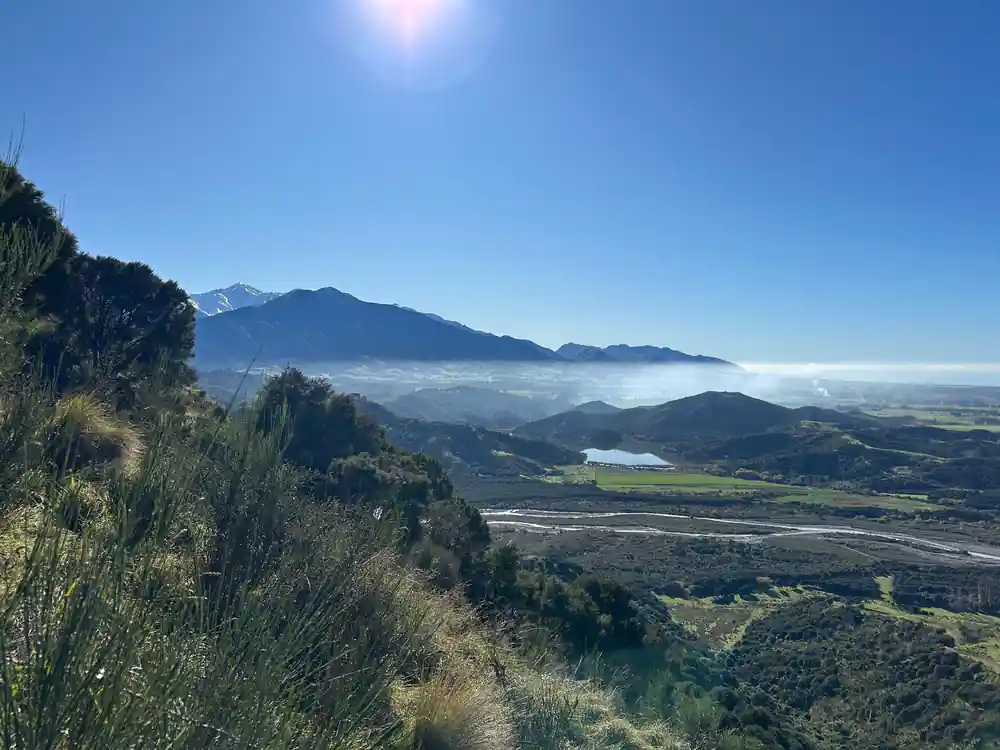
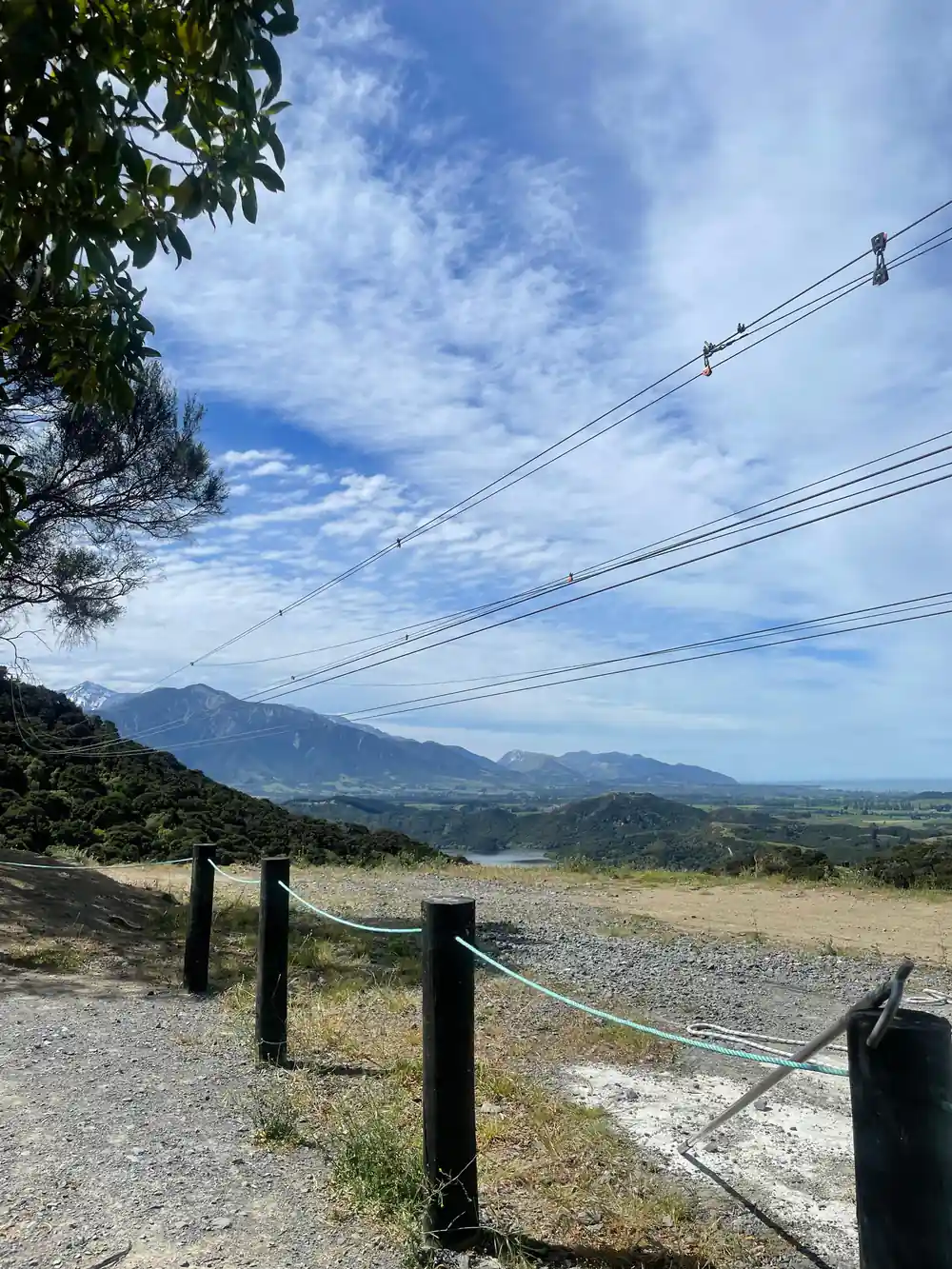
Kaikoura itself sits on the coast of the South Island's east side, with the Seaward Kaikoura Range rising steeply behind the town. The five lines run on the higher ground inland of that coastline, in native forest rather than down on the shoreline the town is best known for.
That setting is part of why the forest reads the way it does. The bush the lines pass through belongs to the hill country behind Kaikoura rather than to a coastal reserve, and it is the same steep terrain that the mountains behind the town are made of.
Where the five lines sit in the day
The ziplines are one section of a longer half-day out of Kaikoura that also includes a guided drive and a four-wheel-drive run through a working farm. Of that, the five lines are the part that puts you inside the trees rather than on the farm track, and the only part built around a fixed course of 250 to 620 metre crossings.
Local guides run the lines and talk through the setup at each platform, so the order from the 250 metre first line to the 620 metre last one is explained as you go rather than left for you to work out for yourself.
The trip is run by EcoZip and guided in English throughout, and the whole outing, gear briefing included, is booked as a single 3 hour 30 minute block. The five lines are the section of that block spent in the trees rather than in the four-wheel-drive or on the farm track.
See the five lines for yourself
from US$117Reserve now & pay later